Tree Nut · Export

Cashew Nuts: from farm to port.

Raw cashew nuts and graded kernels from Nigeria’s cashew belt. Follow each stage of how we source, process, grade and ship cashew nuts to buyers worldwide.

KOR: 46–52 lbsNut count: 180–210/kgMoisture: ≤10%Kernels: W180 / W240 / W320SGS InspectedPhytosanitary CertifiedNEPC Registered

Stage 01 · Harvesting

Harvesting — Collecting Only Fully Ripe Nuts

Nigeria’s cashew season runs from roughly February to May, with the main growing areas spread across Kogi, Oyo, Enugu, Kwara and neighbouring states. Unlike most tree crops, cashew is not picked from the branch. The nut hangs beneath a fleshy cashew apple, and both fall to the ground once fully mature — which is exactly the point at which the kernel inside has reached its best size and oil content.

Farmers walk their plantations every few days to gather fallen fruit, twist the nut away from the apple by hand and bag the raw nuts. Collecting frequently matters: nuts that lie on damp ground for too long start to absorb moisture, discolour and lose kernel quality.

Our aggregators buy from farmer groups and village collection points, checking each delivery for immature, shrivelled or mouldy nuts before it is accepted. Building quality in at the farm gate is far cheaper than trying to grade it out later.
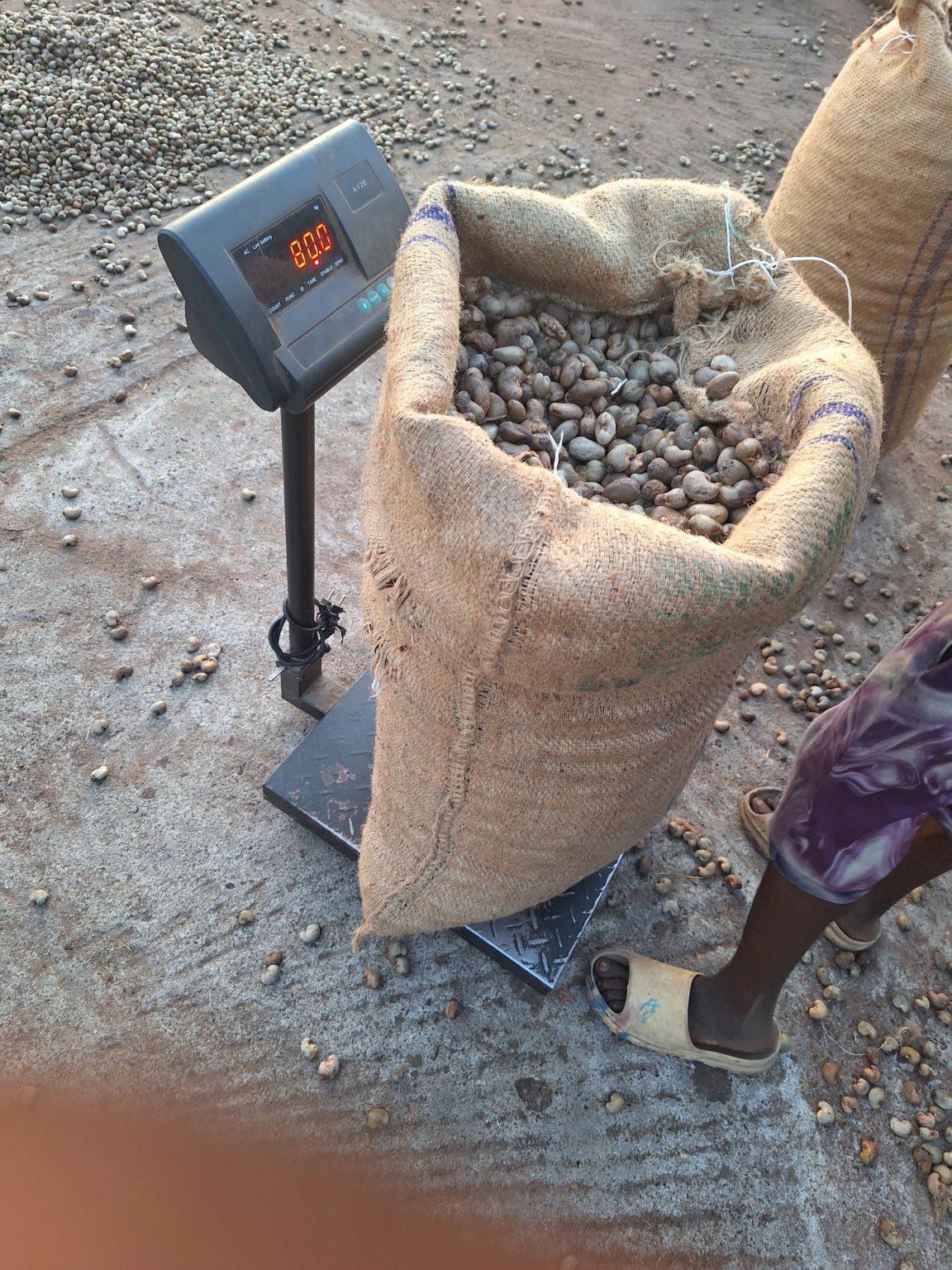
Raw cashew nuts bagged and weighed at a collection point.

Stage 02 · Drying

Sun Drying — Bringing Moisture Down for Storage

Freshly collected raw cashew nuts (RCN) carry too much moisture to be stored or shipped safely. They are spread in thin layers on clean tarpaulins or concrete drying floors and turned regularly for two to three days of full sun, until moisture falls to 10% or below.

Drying is checked with moisture meters rather than by eye. Under-dried nuts sweat in the bag and develop mould; over-dried nuts become brittle, which leads to more broken kernels when they are later shelled. Nuts are kept off bare earth and covered at night and during rain to stop them re-absorbing moisture.

Once dry, the nuts can be stored for many months in ventilated warehouses, raised on pallets and away from walls — giving buyers and processors flexibility over when they take delivery.

Stage 03 · Grading

Outturn Testing — Measuring What Is Inside the Shell

The value of raw cashew nuts lies in the kernel, so RCN is traded on its outturn. A representative sample is cut and the good kernels weighed to give the KOR (kernel outturn ratio), expressed as pounds of usable kernel per 80 kg bag. Nigerian RCN typically outturns between 46 and 52 lbs, depending on the origin and the season.

Alongside KOR we measure nut count (the number of nuts per kilogram — fewer means bigger nuts), moisture content and the percentage of defective, immature or spotted kernels. Lots are sampled across many bags rather than from the top layer, so the result reflects the whole consignment.

These figures go on the contract and are verified again by an independent inspector before loading, so the buyer knows exactly what they are paying for.

Stage 04 · Processing

Kernel Processing — From Raw Nut to W-Grade Kernel

For buyers who want kernels rather than raw nuts, the RCN goes through processing. Nuts are steamed or roasted to make the shell brittle and neutralise the caustic shell liquid, then shelled to release the kernel. The kernels are dried in ovens to loosen the thin brown skin (the testa), which is then peeled away.

Peeled kernels are sorted by size, colour and wholeness into the internationally recognised grades: W180, W240 and W320 for whole white kernels, where the number is the approximate count of kernels per pound, followed by butts, splits and pieces. Sorting combines machines with careful hand inspection.

Throughout processing, hygiene is controlled to food-grade standards, and finished kernels are tested for moisture, foreign matter and microbiology before they are released for packing.

Stage 05 · Packaging

Packaging — Jute for Raw Nuts, Vacuum Packs for Kernels

Raw cashew nuts are packed in 80 kg jute bags, which let the nuts breathe and are the standard unit the RCN trade is priced in. Bags are stencilled with the lot number, origin and weights so each one can be traced back to its grading results.

Kernels are far more delicate. They are vacuum-packed or nitrogen-flushed in foil laminate pouches or tins — usually two 25 lb packs to a carton — which protects them from oxygen, moisture and insects and keeps them fresh for well over a year.

Every shipment carries a phytosanitary certificate, certificate of origin, independent inspection report, weight and quality certificates and, for kernels, a laboratory analysis, assembled to meet the requirements of the destination market.

Stage 06 · Shipping

Container Loading & Export Logistics

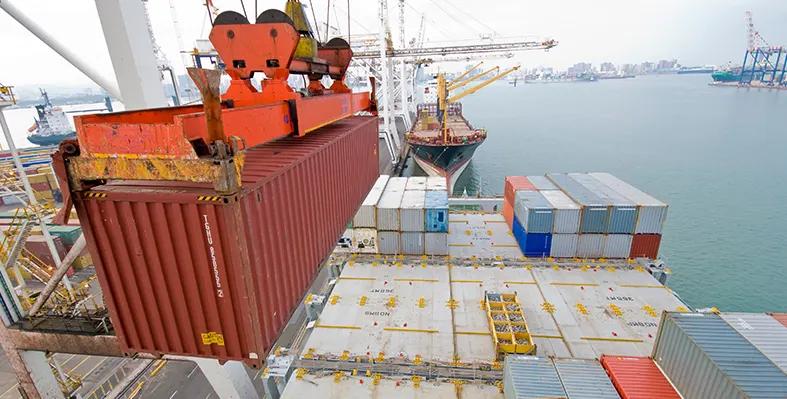
Raw cashew nuts are loaded into clean, dry 20ft or 40ft containers lined with kraft paper, with desiccants added to absorb moisture during the voyage. A 40ft container typically carries around 25 to 27 tonnes of RCN. Kernel cartons are palletised and loaded to avoid crushing.

We ship from Apapa, Tin Can Island and Onne on FOB, CFR or CIF terms. The main destinations for raw nuts are processing hubs in Vietnam and India, while kernels go to roasters and food manufacturers in Europe, North America and the Middle East.

Transit times typically run from 18 to 35 days depending on the destination, and our logistics team shares booking details, tracking and arrival estimates throughout.

Containers loaded at port for export.
Back to all agricultural commodities

Start a trade

Ready to source cashew nuts?

Tell us your grade, volume, packaging and destination port. We will come back with availability, pricing and shipment dates.