Spice · Export

Dried Ginger: from farm to port.

Pungent, high-gingerol split ginger from Southern Kaduna. Follow each stage of how we source, process, grade and ship dried ginger to buyers worldwide.

Gingerol: 1.8–2.5%Moisture: ≤12%Split, sun-driedSGS InspectedPhytosanitary CertifiedNEPC Registered

Stage 01 · Harvesting

Harvesting — Mature Rhizomes for Maximum Pungency

Nigeria is among the world’s largest ginger producers, and Southern Kaduna — around Kafanchan, Kachia and Jaba — is the heart of the crop. Nigerian ginger is prized internationally for its strong aroma and high pungency, which comes from its gingerol and essential oil content.

Ginger for drying is left in the ground for eight to ten months after planting, until the leaves yellow and wither. Fully mature rhizomes have more fibre, more oil and more flavour than younger ginger harvested for the fresh market.

Farmers lift the rhizomes carefully by hand to avoid bruising, shake off the soil and remove roots and stems. Harvest runs from around November to February.
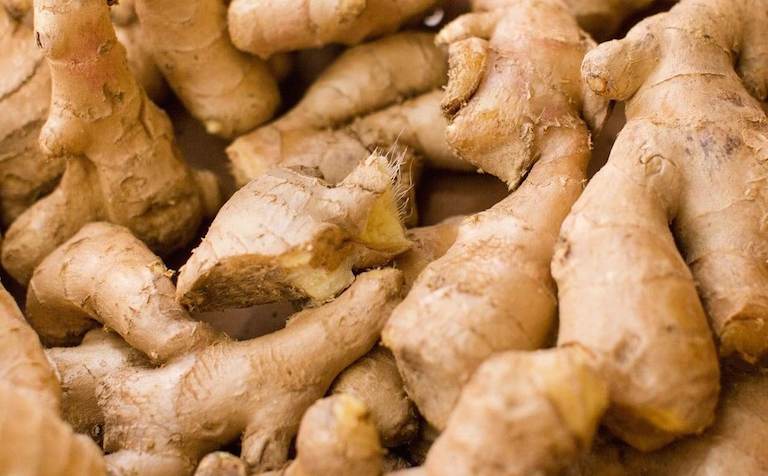

Freshly harvested ginger rhizomes.

Stage 02 · Splitting

Washing & Splitting

The rhizomes are washed in clean water to remove soil, then split lengthwise by hand. Splitting exposes the inner flesh so the ginger dries evenly and quickly, which is what gives split ginger its pale colour and keeps its oils intact.

Some buyers prefer whole dried ginger, or peeled ginger with the outer skin scraped off. We prepare each lot to the form the buyer has specified before it goes on to dry.

Any rhizomes that are diseased, damaged or shrivelled are removed at this stage.

Stage 03 · Drying

Sun Drying — Locking In Flavour

Split ginger is spread on clean mats or raised platforms and dried in the sun for one to two weeks, losing most of its water as moisture falls from around 80% to 12% or below.

The ginger is turned regularly so it dries evenly, and it is covered at night and during any rain. Drying too slowly invites mould, while keeping it off the ground keeps out sand and dirt.

Well-dried ginger is hard and snaps cleanly. It can then be stored for many months without losing its pungency.

Stage 04 · Grading

Cleaning, Grading & Testing

Dried ginger is cleaned to remove dust, sand and loose skin, then hand-sorted to remove mouldy, insect-damaged or poorly dried pieces. Lots are graded by size and colour.

Samples are tested for moisture (12% or below), gingerol and essential oil content, and ash. For food markets we also test for aflatoxins and other contaminants, so the ginger meets EU and other import limits.

An independent inspector confirms the results before loading, and the reports travel with the shipment.

Stage 05 · Packaging

Packaging & Documentation

Dried ginger is packed in new jute or polypropylene bags, typically 30 to 50 kg each, marked with the lot number, origin and weights.

Bags are stored on pallets in dry, ventilated warehouses and fumigated where the destination requires it.

Every shipment is accompanied by a phytosanitary certificate, certificate of origin, independent inspection and analysis reports, fumigation certificate, bill of lading, commercial invoice and packing list.

Stage 06 · Shipping

Container Loading & Export Logistics

Ginger is loaded into clean, dry containers lined with kraft paper, with desiccants to absorb moisture during the voyage.

We ship from Apapa, Tin Can Island and Onne on FOB, CFR or CIF terms, with spice processors and traders in Europe, the Middle East, India and North America among our main destinations.

Our logistics team shares booking details, tracking and arrival estimates throughout the voyage.

Containers loaded at port for export.
Back to all agricultural commodities

Start a trade

Ready to source dried ginger?

Tell us your grade, volume, packaging and destination port. We will come back with availability, pricing and shipment dates.